Special Perks for Special Healthcare Workers—Like You.
Take advantage of these special FREE resources now available to healthcare workers and first responders.
Companies across New York and across the country are stepping up to support health care workers who are on the frontlines of the fight against COVID-19. Please explore these resources. Thanks for your hard work. You deserve all the help you get!
Allbirds
Allbirds is donating shoes to the medical community. They’ve already given out $500,000 worth.
Email together@allbirds.com for your free pair of wool runners.
Krispy Kreme
Krispy Kreme is offering anyone in the medical community a dozen doughnuts, free of charge. Valid every Monday through May 11.
“Just go to a Krispy Kreme drive-thru and show us your employer badge. That’s it,” the company said. “Pick up some free dozens on the way to work for you and your colleagues, or maybe a free dozen on your way home to family after a long shift.”
Sweetgreen
Sweetgreen is delivering free salads and bowls to hospital workers.
Hertz Car Rentals
Hertz is offering NYC healthcare workers a free rental car, up to 1 month!
Starbucks Coffee
A free tall hot or iced brewed coffee to anyone that identifies themselves as a COVID-19 front line responder through May 3rd.
Uber Eats
Uber Eats has pledged to give 300,000 free meals to first responders and health care workers.
Four Seasons Hotel
The Four Seasons Hotel on 57th Street will provide FREE lodging to doctors, nurses & medical personnel currently working to respond to the pandemic.
The hotel, like many, is closed due to COVID-19 until 4/15. But healthcare workers can call the hotel at 212-758-5700 to book a free room.
Crocs Shoes
Get a free pair of crocs to help you, while you help us alot.
AirBnb
Providing health care professionals, relief workers and first responders free or subsidized housing.
Childcare
Westchester Childcare
All school districts in Westchester County are now providing childcare for children ages 5 to 12 for healthcare workers and first responders with no other childcare options.
New York City Childcare
Regional Enrichment Centers—places where the children of front-line workers can be safely cared for while their parents continue to serve the city in this time of need.
Long Island Childcare
Emergency childcare is available for residents of Nassau and Suffolk County.
For more special perks and discounts, click here.
How to use Facetime to talk to friends and loves ones
How to use Facetime to talk to friends and loves ones
Available to iPhone and iPad users
- In the Facetime app, tap the plus button and type the person’s phone number or email address.
- Tap the number or address, then tap Audio or Video.
- If you have the person’s phone number or email address saved in your contacts, you can start typing their name and tap the name when it appears.
Once you have made the call, the next time you open the app, their name will appear when you open the app. Simply tap on their name.
How to use WhatsApp to talk to your loved ones
How to use Whatsapp to talk to your loved ones
Simple:
- Install Whatsapp on your phone.
- Tap on Whatsapp.
- Tap on the contact you want to call.
- Tap on the movie camera icon.
- You’re on!
How to use Skype to talk to friends and loved ones
How to use Skype to talk to friends and loved ones.
- Check for a webcam.Be sure your computer has a webcam. On most laptops, the webcam will look like a small hole in the top border of the screen.
- Install Skype.Depending on whether or not you have a Mac or a PC, the download link is different.
- For Windows users:Go to this link: http://www.skype.com/en/download-skype/skype-for-computer/. Click on the green button that says, “Get Skype for Windows Desktop.”
- For Mac users:Go to this link: http://www.skype.com/en/download-skype/skype-for-mac/. Click on the green button that says, “Get Skype for Mac.”
- Follow installer instructions.The Skype download should start automatically and the installer will guide you through how to install the program.
- Open Skype.After the program is finished installing, open up Skype. If you have trouble finding the program, follow these instructions for Mac or PC.
- For Windows users:Press your Windows key (left of Alt key), type “Skype” and press ↵ Enter.
- For Mac users:Open up Finder, search for “Skype,” then click on the program
- Click on a contact.In the left side of your screen, you will see a list of contacts if you have added any. Click on the name to open up a conversation with that person.
- If you haven’t added any contacts, you will first have to add at least one. Ask for a friend’s Skype ID, click Contacts in the upper left of the window, click Add Contact in the dropdown menu, then type your friend’s Skype ID.
- Start a video call.To start a video call, you must first be in a conversation with a contact. The instructions are slightly different for Mac and PC users.
- For Windows users:Click on the icon in the upper right corner of the window that looks like a video camera. It should be a blue circle with a white video camera inside.
- For Mac users:Click on the icon in the upper right corner of the window that looks like a video camera. It should be a green circle with a white video camera inside. Depending on your version of Skype, the icon may instead simply say, “Video Call.”
- You may be asked for permission for Skype to use your video camera, click “Allow” if you are comfortable with Skype having access to your camera.
- End the call when done.End the call by pressing the red button on the bottom of the video call window. The icon looks like a red circle with a white phone inside of the circle.
- You may need to move your cursor around the inside of the video call window to reveal the hang-up button.
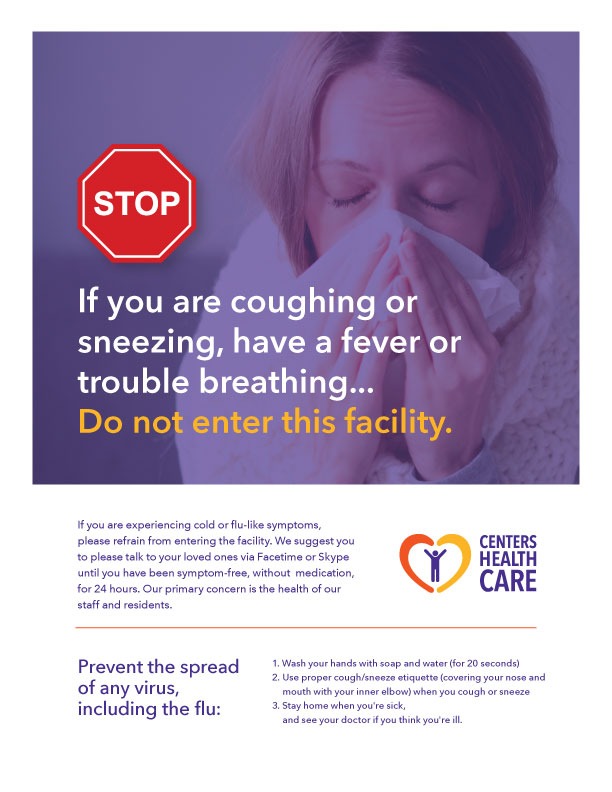
Coronavirus Notice:
Bushwick Center Discusses Ageism Among the Aging
A negative outlook toward the elderly is, unfortunately, something that many of the residents of long-term care facilities like the Bushwick Center for Rehabilitation and Nursing have experienced before coming to join us. This idea is probably not one that is unfamiliar to us, but there may be an aspect of the ageism problem that we find surprising. Ageism by aging is rapidly increasing, and it causes difficulties not only for those who are discriminated against but also for those doing the discriminating.
Our country is currently facing the challenge of one of its largest populations (the Baby Boomer generation) aging into its elderly years. This is rapidly creating the largest number of geriatric patients in the healthcare industry has ever seen. At the same time, modern western medicine has improved to the point that people in developed countries like the United States and Canada are living longer than ever before. This comprehensive trend has also created a shift in the mentality of the population. Because there are so many people remaining in their peer group, many people years beyond the age of retirement no longer see themselves as being or becoming “elderly.”
On an individual basis, this may make it difficult for a senior to accept the necessity of transitioning to a long-term care facility like the Bushwick Center. They may have trouble allowing themselves to properly socialize with other residents who they view as being “so old”, and they may find it unfair that they are being separated from the younger population. While, of course, it’s always good to remain “young at heart”, it’s also best for everyone to be realistic about age and each person’s practical circumstances.
The easiest way to ensure that seniors have a realistic outlook as they deal with the challenges of aging is to promote ongoing and honest communication. Although it may be more comfortable to pretend with your beloved senior that they’ll remain young and independent forever, it’s actually much healthier to discuss the future with them in a practical way that acknowledges and embraces the changes that come with aging.
The Bushwick Center Clears Up Questions on Wound Care and Moisture
Like many of the Bushwick Center for Rehabilitation and Nursing patients and their families, you’ve probably heard some conflicting information over the years regarding how to properly treat an open wound. You may know that there are hydrating solutions on the market, and that they are meant to keep covered wounds moist. However, you may also feel certain you’ve always been told that a wound needs to be given the opportunity to “breathe” and dry. Although this information may seem impossibly contradictory, each of the two approaches is correct given different circumstances. Because wound care is so important to elderly patients, it’s best if we understand what approach should be used and when.
Immediately after a wound has occurred, we want to avoid wiping at it. The main reason is because older skin and tissue tear more easily, due to the fact that they lose a certain amount of strength and elasticity as we age. However, wiping the wound can also have the added negative effect of absorbing away too much of the bodily moisture that may otherwise promote healing and new cell growth. Once we’ve cleaned the wound, we do often want to keep it covered to help avoid infection do to exposure to dirt and germs, but the wound dressing itself can sometimes absorb too much moisture away from the wound. In such cases, we have the option of using hydrating formulas to provide artificial moisture to make up form the natural moisture that is being lost.
Hydrating formulas are not necessary, and often not good, for every wound that needs dressing, though. Depending on the location and the type of wound, the body may already be providing an excessive amount of fluid to the wound area. In these cases, we want to try to gently dab away and then absorb any excessive fluid present near the wound. A certain amount of moisture does aid in the skin’s healing process, but too much can be messy and may even impede our patient’s recovery.
The Bushwick Center Squares Off Against Pressure Ulcers
Due to the dangerous potential they represent for the occurrence of chronic or non-healing wounds, pressure ulcers are a top priority on the wound care list at the Bushwick Center for Rehabilitation and Nursing. Also called bedsores or decubitus ulcers, they can be caused by prolonged exposure to pressure, and they can affect not only the skin itself but the tissue underneath as well. They often occur at the bony areas of the body that most commonly come into direct contact with surfaces.
Elderly patients often have thinner, drier skin that can sometimes tear easily. This, combined with the nearly constant pressure of remaining in the same positions without much variable activity, drastically increases the chances for developing this type of dermal ulcer. Because elderly patients have compromised immune systems and an increased chance of contracting infections, it is imperative that pressure ulcers be treated as quickly and effectively as possible.
According to the National Center for Biotechnology Information, “the assessment and management of a pressure ulcer requires a comprehensive and multidisciplinary approach.” The treatment of these complicated injuries can be dependent on the patient’s functional status, nutritional habits, degree of support, and other coexisting conditions. Ideally, the greatest defense is prevention, and our staff does their best to aid patients in avoiding pressure ulcers when possible.
Parkinson’s Disease 101 – What is Parkinson’s Disease and how can it be treated?
Today, April 11th is World Parkinson’s Day. British doctor James Parkinson first discovered Parkinson’s disease exactly 200 years ago in 1817. He published an article titled “Essay on the Shaking Palsy” that described the symptoms of the disease that would be named after him. Sadly, Dr. Parkinson was not able to discern an exact cause or a cure the disease, a question that scientists and doctors are still trying to find answers for 200 years later. Some researchers believe that Parkinson’s is genetic like other diseases. Other researchers believe that Parkinson’s may have been caused by a viral infection or an adverse reaction to environmental toxins like pesticides.
Parkinson’s disease affects millions worldwide, impacting mostly the elderly but younger people could still experience symptoms. Famous examples of those that suffer from Parkinson’s disease include actor Michael J. Fox, who had experienced symptoms of early-onset Parkinson’s when he was only in his early 30s, and the late Muhammad Ali, who was diagnosed with Parkinson’s when he was in his 40s due to the repeated blows to the head he experienced throughout his boxing career.
This disease causes irreversible brain cell loss and damage to the central nervous system. The result of this degenerative condition is that less dopamine is produced and the striatum, one of the areas of the brain that coordinates movement, is unable to function properly. Those that suffer from Parkinson’s experience symptoms such as tremors, stiffness, imbalance, and slow movement.
Because there is no cure for Parkinson’s disease, the best way to prevent it from taking over you or your loved one’s life is through treatment. Most treatment options involve restoring the imbalance of neurotransmitters and regulate nervous system operation so your body won’t be making movements against your will. There are several prescription medications that can correct this chemical imbalance. However, if medication is not enough to control symptoms, there are a few surgical procedures that can be an option.
Hopefully one day, we can find a cure for Parkinson’s disease so that surgery or an extensive regime of medication will no longer be necessary for those that have the disease and would like free control over their bodies once more.
4 Super Simple Ways to Improve Your Memory
Memory loss is a scary concept. Imagine waking up one day not knowing who you are and trying to figure out your “past” life. Now what if you didn’t have to face the pain of forgetting a precious memory? If you fall victim to a neurological ailment, memory loss may be inevitable. But it can be preventable. Here are 4 very simple things you can do today to preserve your memory tomorrow and the days to come:
1. Diet – Be mindful of what you eat and your mind will thank you for it. If your diet mainly consists of high-calorie, processed foods, it will impact not just your memory but also your entire body. Take a look at our previous post in which we go through five of the best foods you can eat for your brain.
2. Get in the habit of writing things down – Try as you like, there’s only so much you can remember in a given moment. Having a to-do list, whether it’s through a mobile app or a handwritten planner can keep you on track. Extra activity keeps your brain engaged and electrified, and an active brain has a strong memory.
3. Catch more Z’s – Insomnia or other sleep disorders aside, sleep is so essential to our health. If you don’t have a diagnosed sleep disorder and you have trouble sleeping, check out our blog post where we go over 6 common reasons why you may have trouble sleeping. As we sleep, our brain stores short-term memories as long-term memories. If we don’t get enough sleep, our memories won’t be as sharp.
4. Brain games – Numerous scientific studies have been conducted on brain games and what kind of role they play in improving memory and overall brain health. These studies have concluded that brain games, or any other kind of activity that encourages mental stimulation like a puzzle or video game, keeps the brain sharp. Think of the brain as a muscle and these games as barbells. Don’t be afraid to lift heavy for a strong brain and if you don’t use it, you lose it!
These are but a few methods you can easily implement to keep your brain sharp and memories intact.